For a long time in the past, the balance development team that I belong to was solely focused on the development of weighing devices. Within the field of weighing devices, we were responsible for the development of all types of balances applying electromagnetic sensor technology – from analytical to high-capacity models. As for devices not using an electromagnetic sensor, we handled the commercialization of a 1:60,000 resolution high-precision load cell-type scale, as well as a compact electrostatic capacitance scale, starting from the development of their sensors. On the other hand, the team also has a history of horizontal development of the base technologies used in electromagnetic balances, the redevelopment of a tuning fork vibro viscometer. We even worked on a heat-drying moisture analyzer which uses elements from mass measurement and calibration devices for pipettes which apply the gravimetric method, from early planning stages to development and sales promotion activities after the market launch. I think all of this different work provides examples of both vertical and horizontal product development, focused around base technologies.

All this development points to a direction that a manufacturing company can take in order to expand their operations. That is, focusing efforts around technology owned by the company and developing products which utilize those base technologies. It also demonstrates a plan for introducing new products to a market previously shaped by existing products.

Particularly in the laboratory market that uses balances, the three tools which are held in extremely high regard are the micropipette, the microscope and the analytical balance, which is typified by microbalances. All three of these items are commonly used in a variety of research fields. Having already released a range of microbalance in the market, we have now moved to the development and commercialization of electronic pipettes as strategic products in the laboratory market.

Starting with the pharmaceutical industry, use of micropipettes has spread to a wide range of fields for many different substances, including the biotech or genetic research, clinical trials, foodstuffs and cosmetics industries. They are now considered indispensable tools in the research field. These different fields are certainly markets which will grow in the future and more than 20 pipette makers are already crammed into the international market. A decade or two ago the annual market size for pipettes was around 1 million units per year, but that figure is now considered to have doubled to 2 million per year. However, most of the micropipettes presently being sold are manually operated types. In the research field, many researchers are performing pipette operation all day in order to create reagents or samples for use in various clinical assays, for proliferation of genes, etc. However, in these present circumstances manually operated pipettes could be said to present a number of problems for researchers.

Among the most concerning of these problems could be the risk of tendonitis or repetitive stress injury (RSI) developing on the thumbs of many researchers after repetitive operation over an extended period of time. Another problem is that for accurate dispensing, expert operation is required, and there is an individual variability between operators of up to 10-20% for aspirating and dispensing volumes. This causes variation in the sample size, and as a result, the level of precision in tests drops quite considerably. Moreover, as the amounts being dispensed are relatively small, they are principally used only in laboratories, and not on the production floor, making them not subject to management based on Good Manufacturing Practice (GMP) guidelines. Because of this, in contrast to their importance as a testing device and their frequency of use, they are positioned as a device that is not for use in formal situations and are not given proper management. Further problems include the comparatively high cost of sending pipettes to an outside facility for repair or calibration, the lengthy duration this will take and the fact that traceability cannot be guaranteed in the following half year or year until the next calibration.

The problems mentioned above in relation to pipettes have been recognized for quite some time. However they have a history of being neglected as problems which cannot be solved. In response to this, A&D have taken a head start in the industry and commercialized a tool for volume management based on the gravimetric method using a weighing instrument, which allows compliance with the international standard for pipette management, ISO8655. A&D have also solved perhaps the biggest problem for pipettes of air leaks in the piston section with the release of a leak tester which can identify an air leak in an instant – a consideration which gives the end user a possible technique for self management of pipettes themselves.

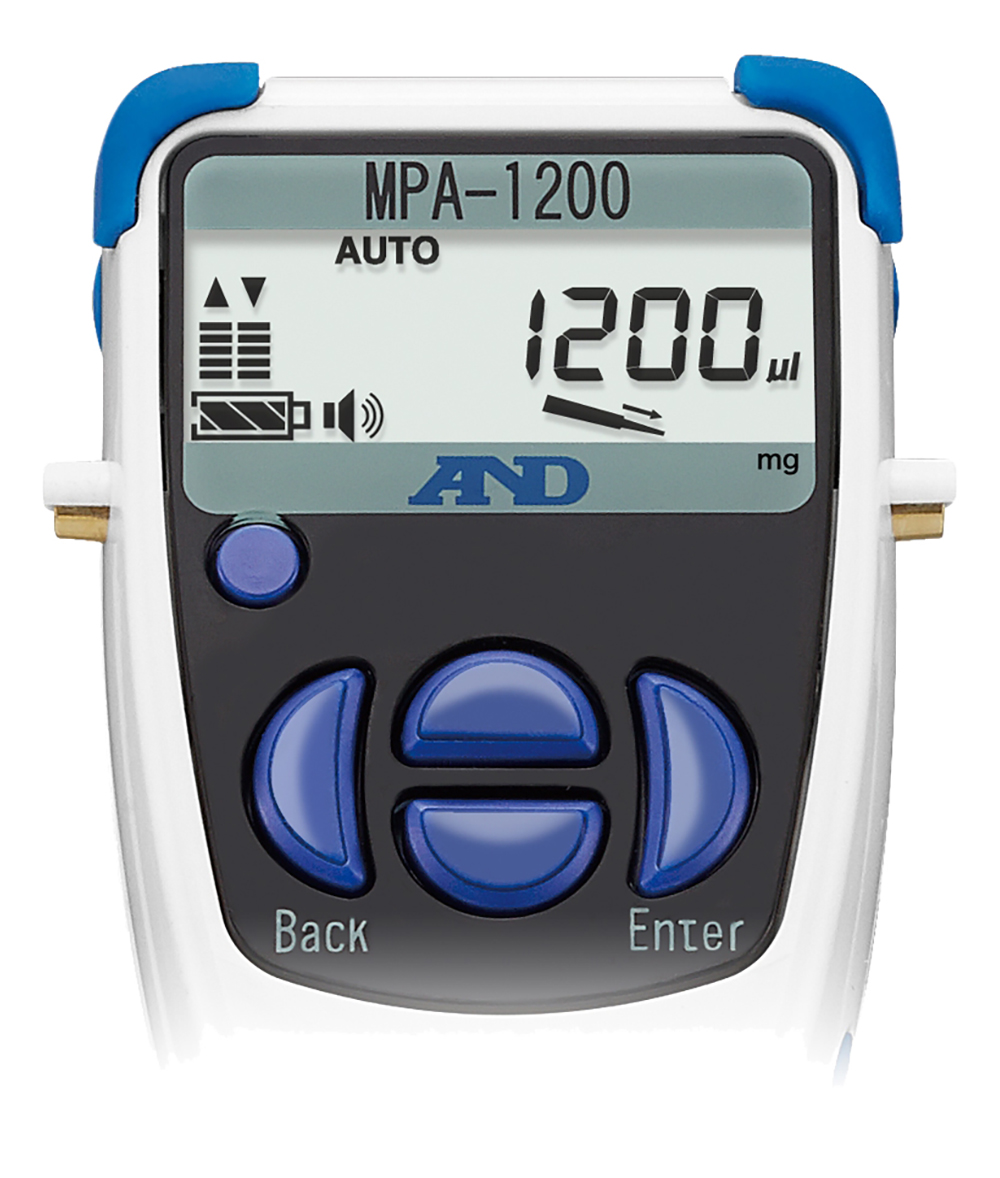
And now, we have decided to introduce to the market our own originally-conceived pipette to answer some of the basic problems that are inherent in pipettes.

A&D’s MPA series employs a power-operated system in order to prevent repetitive stress injuries and reduce the influence of individual variances in operation methods between users. There have been many proposed electronic pipettes in the past, but they did not receive very high praise in the market. This was because they were comparatively more expensive than manual pipettes and could not be used when the batteries died. Further, they were easily breakable and there was a high cost in time and money when they had to be repaired. There was also some concern regarding their performance. For models designed for dispensing large volumes, the electronic pipette took longer to do the job than experienced operators with a manual type device. Due to issues such as these, electronic pipettes presently only make up a mere 10% or so of the total pipette market.

In terms of limiting discrepancies in individuals’ pipetting work and the gains in quality this adds to the work process, simplification of dispensing work and prevention of workplace injuries of researchers, electronic pipettes have a great many advantages over manual ones. However considering all the demerits which are also mentioned above, electronic pipettes are still not a popular device for many researchers. Reflecting on these negative aspects mentioned above, new functions have been added to our new design, with an improvement to basic performance, an increase in durability against falls and a record of calibration results which guarantees performance at the time of delivery. We further aimed to improve after sales service by providing an exchange of batteries after the device is in use, lengthening the warranty period and offering replacement devices while the purchased product is being repaired. We also set the price at a level that made it very competitive against manual devices.

By guaranteeing the above product specifications and our additional market services and by introducing new pipette management devices to the market, Standard Operating Procedures (SOPs) essential in the workplace can be properly established and compliance with Good Laboratory Practices (GLP) or Good Manufacturing Practices (GMP) in the place of use is now also a possibility. With the researchers themselves taking responsibility for their pipette management, all gaps in traceability resulting from entrusting management of pipettes to outside organizations can be removed and efficient pipette use and management practice can now be thought of as achievable.

In tomorrow’s laboratory, which will have to fully embrace the globalization of the research field, a full guarantee of traceability and device management which meets various regulatory standards is becoming increasingly important.

We are expecting our new electronic pipette MPA series to fully deliver a significant improvement in quality to the research field, together with our pipette management devices, with new functionality and services which greatly reduce the number of problems which can occur with the use of pipettes.

Investment is continuing in production facilities in East Asian countries such as Korea, Taiwan and China, which form the world’s main manufacturing center. Accordingly, uses of weighing devices on these many production lines are also increasing. In particular, while domestic growth in production facilities remains in the doldrums in Japan, opportunities are increasing for production facilities designed in Japan being introduced to these now leading manufacturing countries, or for directly exporting to the region the main pieces of equipment used on these production lines.

The main areas exhibiting this growth are parts and components production, such as lithium ion batteries, integrated circuits, liquid crystal, LED or solar energy generation parts. All of these new fields are areas that Japanese makers developed but were beaten in competition in the international arena.

But what is perhaps interesting in these markets is that while Japan may have lost its share of finished products, it remains competitive against various other Asian countries in supplying production equipment for those products. Also, Japanese products are still preferred for the key components that are essential in this production equipment such as different types of sensors, weighing devices and dispensing devices.

These facts are not unrelated to the predicaments facing major Japanese manufacturers of consumer electronic products, who have had their market share stolen by fresh new players from other Asian countries like Korea, Taiwan and China.

Taking the market for liquid crystal display TVs as an example, Japanese producers of the essential materials such as glass, films, bonding agents or resists have quiet strong export figures. This phenomenon reminds one that in the past, the first generation robots in the field of factory automation(*1), and later personal computers, came to be produced by the easy assembly of parts and components. This is because only black box makers will enjoy an advantage when devices are completed simply by the assembly of black boxes components; a black box being defined as a constituent of a device whose technology is unknown, even when the device is disassembled.

There is a suggestion that Japanese makers of light electrical appliances have started to suffer due to the Lehman Shock, the steep appreciation of the yen after that and attempts to respond to the unique and particular consumer demands of the Japanese domestic market. But if we conjecture from events of the past, we can say that Japanese makers lost their dominant market position due to a loss of planning ability for new products, with more parts becoming black box items. With this, quality standards in other Asian countries caught up with Japan, and as a result Japan has lost their competitiveness in technology and price, which has lead Japan to a prolonged period of stagnation. In other words, the extended period of manufacturing decline experienced by the United Kingdom and then the United States could also be connected with what is presently happening in Japan as well.

This development has been said to have repercussions in the automotive industry as well, with the growth of the market for electric cars without complicated internal combustion engines leading to the continued development of a market for products assembled from a series of different units, such as a motor, battery, chassis, etc.

Under these circumstances, it is considered that in the future Japan must hurry to establish specialist technology in fields where it cannot be easily replicated, advance development of black box parts or elements which cannot be quickly overtaken by competitors and increase its planning ability for new products. Also, regardless of the scale of the company, Japanese companies which depend disproportionately on a single item and thus have only limited markets to sell finished products to tend to have already lost their product planning and development capabilities in the new fields. Consequently, they often lack adaptability to markets where there is room to expand and may well encounter difficulties sustaining future business enterprises.

While that was quite a long introduction, the purpose of this development story is actually to summarize points of interest regarding the use of weighing devices for automated machinery.

In the field of automated machinery, many balances are used, from the commonly-called microbalances with a minimum display value of 1µg (one millionth of 1g) up to large scale electronic balances with a weighing capacity of several dozen kilograms. In particular, microbalances were previously only used in specialist fields such as organic microanalysis, mainly for measurement of analysis samples of just a few micrograms. But as a result of the growth of the smart phone market, application of resist ink to their small liquid crystal displays has meant an adjustment from several hundred milligrams for the previously dominant large screen television market, to just a few milligrams in recent years. Accordingly, there has also been a shift in demand for the minimum display of weighing devices from 0.1mg to a highly sensitive 0.001mg (1µg).

Particularly with 1µg measurements, it is clear that very subtle influences such as people’s body heat or breath, vibrations or changes in pressure from people’s movements, as well as slight ripples in temperature or the gentlest of breezes from air conditioning, can lead to a deterioration in measurement error and repeatability.

At present, there are only a handful of manufacturers producing weighing devices for production lines with 1µg sensitivity. All of these manufacturers will thoroughly check the performance of the device at their own premises before shipping it. At A&D as well, we spend close to an entire day to check each device for continual repeatability with an automated tester before delivering it. As human operation is the main cause of error in micro measurement, critical performance appraisal and confirmation of 1µg repeatability is not recommended by hand for weighing devices designed for automatic operation. In other words, there is no point in testing the device with those external disturbances mentioned above only at the time of receipt when actual use of the device will not be under human operation.

We can summarize the problems that arise when the weighing devices are utilized as part of an automated process, as well as the solutions to those problems, into the following, based on our previous experiences.

1) Vibrations
With automated machinery, the weighing device is often installed in the same space used to house some drive system, with vibrations from the drive system often being transferred to the weighing device through its mounting base. To avoid this, measuring and operating the drive system at different times, applying a “vibration adapter” between the weighing device and its mounting base, and slowing down the movement of production line equipment near the weighing device to reduce air movement (wind pressure) are all effective measures.

2) Changes in air movement and temperature
As automated machinery will have a source of heat generation such as its power unit, it will often also have a fan to displace this heated air. It will be effective to handle this disturbance to measurement stability by installing a draft shield which completely covers the device or adding one that surrounds the weighing pan. Points to be careful of when using such a device are the influence that even the slightest of gaps can exert on measurements in µg units. For example, even if one side is left open, caution must be exercised to ensure the device becomes a dead end for circulating air, with all wind flow being completely cut off. If the intrusion of wind can be prevented, this will often mean that changes in temperature due to convection flows can be controlled as well.

3) Static electricity
Automated machinery is naturally accompanied by the movements of machines, etc. In particular, glass or resin containers are known to cause static build up from friction while being conveyed. Also, in the dry environment of a battery production line, the resin fixtures used to hold the batteries can easily become charged to over 10kV, and the force of this static electricity would be enough to cause measurement error at the level of dozens of micrograms. As a natural electrical discharge is not expected in a low humidity environment, a proactive neutralization strategy is necessary. In this case, in order to minimize costs of a neutralization strategy, use of a static electricity measurement device which can visualize static electricity and introduction of a DC neutralization device which, having strong neutralization effects, doesn’t need to fan air have been proven to be effective. (*2 Static electricity measurement device/neutralization device)

4) Overload
Particularly in the case of measurement objects exceeding several kilograms, weighing devices can be damaged by overload. The results of tests on overload tolerance actually show the results of tests on metal fatigue failure, and with various conditions being contributing factors, the reproducibility of the test itself becomes a problem. At the weighing device’s actual place of use the system is designed with the premise that the device does not break, so tolerance tests comparing different weighing devices should, due also to individual differences between devices, have little significance for actual use on location. Also, to be perfectly honest, as the devices will sooner or later become damaged, the level of maintenance at the time of damage (costs × turnaround time) is therefore important.

As a generalization, if a load placement on a weighing pan by hand is taken as 1, under identical conditions, a load placement on a weighing pan by an uncontrollable actuator such as an air cylinder will place approximately 3 times the load on the weighing device as human operation. The loads for all weighing devices are assumed to be measured under static weighing conditions, with the acceleration rate at this time equivalent to 1G (1000gal). In other words, the acceleration rate added by automated equipment is predicted to amount to several Gs, so when a weighing device is introduced to an automated production line there is a necessity to prepare a device whose weighing capacity is several times larger than the weight of the anticipated objects to be weighed. Stated another way, in order to ensure a safe rate of measurement equivalent to measurement by hand, a weighing device added to an automated process will need a weighing capacity 2 or 3 times that of a human operated one. Further, impact loading has particularly sharp peaks and extremely large values have been shown. Therefore installing an impact resistance adapter between the pan and the weighing device as a load pathway dramatically improves the measurement safety rate.

5) Calibration
Weighing devices incorporated into automated production lines are often very hard to remove again and there have been many customer requests for devices which are not only durable, but self-calibrating ones as well. However, when we think of the minimum sample weight commonly used in the pharmaceutical industry, the measurement will be reliable enough if the measured value is 3000 times the repeatability of the weighing device. The fact is that microbalances are for weighing 10mg, semi microbalances are for weighing 100mg, and even standard analytical balances of 0.1mg display are actually installed and used with the final purpose of weighing objects of several grams. On the other hand, the sensitivity drift of the weighing device is generally 2ppm/°C (2×10E-06), that is to say, with Δ10°C change in temperature, with a measurement sample of 1g: 1g×20E-06=0.00002g. In other words, even with a temperature change of 10°C, the actual difference in measurement value that arises per gram does not even exceed 0.02mg (20µg). To put it simply, as the balances will not actually be weighing masses near their capacity, but rather used for weighing fractional amounts, considering the above from a technical viewpoint, you can say there is no need for calibration in response to a change in temperature. Further, with recent balances, changes in values over time have been found to hardly occur at all (*3), and it is considered that there is actually no necessity for calibration at all, excepting circumstances where damage may potentially occur, such as dropping the object for measurement or a jarring load, etc.

To summarize the information above, more precise mass measurement on automated production lines is increasingly being seen. This is a response to customer demands to realize higher quality and productivity. Mass measurement differs from optical measurement and other methods in delivering high precision at a low cost, with the advantage of being easily able to manage the entire quantity of the sample, from the surface of solids, powders and fluids to any internal defects. On the other hand, its down sides are long measurement time and susceptibility to its installation environment. However with regard to improving the installation environment, various analytical tools have already been prepared and it is now possible to perform stable measurement even at the 1µg level. As a weighing device maker, it is our strong intention to further respond to market needs with application of these already established technologies to realize faster and more stable weighing performance.

*1 In the 1980s, Japan led the world in the global boom for robots on factory floors. Many scara robots were proposed as industrial goods, but as most manufacturers made their products using a control instrument from just one company, or combining servomotors from several companies, they invited intensive price competition and many of them were bankrupted.

*2 Static electricity measurement devices, neutralization devices: AD-1684 Non-contact Electrostatic Fieldmeter / AD-1683 DC Fanless Ionizer

*3 Summary of durability test results: Using the AD4212C-300 a durability test of 30 million times (over one year) was performed with a maximum drift in measurement values of 5mg (5 scale) confirmed for a 200g weight. For further information, please refer to A&D’s product page.

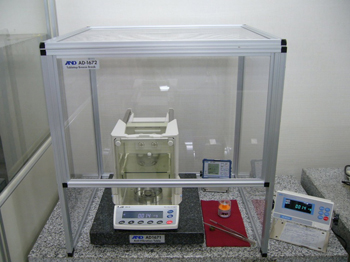
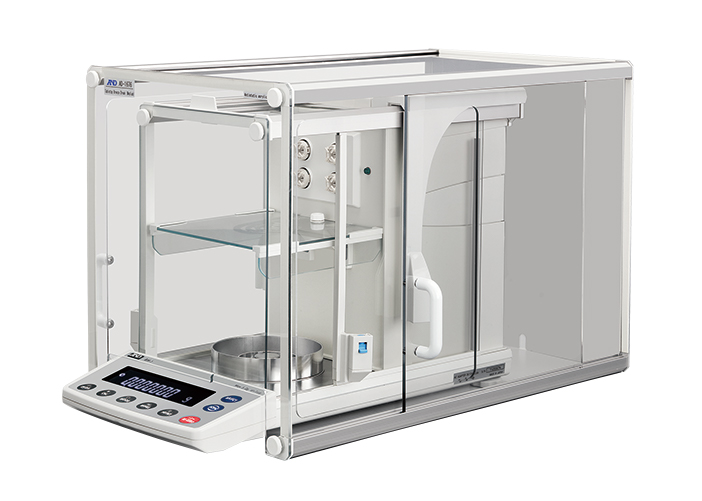
Balance Enclosure: AD-1673 + Micro analytical balance: BM-20

Two years ago we released the micro analytical balances BM-20/22. With the continued sale of these analytical balances we here at A&D have come to two realizations. The first is regarding the necessary environment for stabilizing microbalance measurements. Secondly, we have also gained some knowledge about the samples measured by microbalances.

I would like to summarize this information we learnt from our experiences in the marketplace into a concrete proposal, which can act as a guideline for realizing better weighing practices.

The progression from testing theoretical knowledge regarding measurement environments with actual data in the fields to making a product that stimulates latent demand takes both a long time and a very determined effort. However, this product development process is an issue of significant importance for an equipment maker, essentially one they will have to stake their continued existence on. Using earlier market research and our many experiences from product development and sales, we have proposed the tools below for tangible improvements in measurement environments.

1) Suggestions for the measurement and elimination of static electricity in measurement samples

Electrostatic field meter: AD-1684 / Analytical balance with built-in static eliminator: BM Series / Static eliminator: AD-1683

2) 24-hour measurement and evaluation of measurement performance in real measurement environments

Conducting AND-MEET

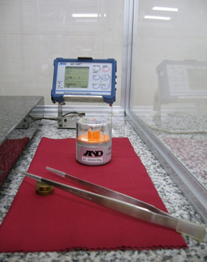
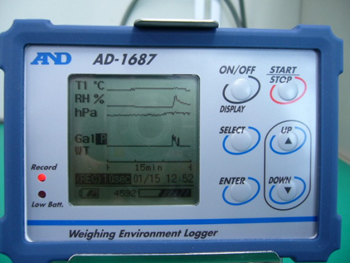
3) Suggestion for the simultaneous recording of temperature, humidity, air pressure, vibration and weight values in order to properly evaluate a measurement environment

Weighing environment logger: AD-1687

4) Suggestions for anti-vibration table for weighing instruments and tabletop breeze break as tools for improvement of measurement environment

Tabletop breeze break: AD-1672 / Anti-vibration table (for reduction of minute vibrations): AD-1671

These tools are effective in locations where microgram weighing is performed, and have made it possible to achieve such ideal performance levels that the minimum sample weight is now below 10 mg at those locations. On the other hand, by proposing these tools to the market we were able to understand the measurement needs of microbalances at the location of use and this led to some understanding of why microbalances would be purchased in the first place.

For example, microbalances are used in locations where measurements of minute amounts are required, the samples to be weighed could be used for organic microanalyses of food additives and proteins, etc., or as samples used to analyze the tiny elements found in dirt or mud. They also have many uses in other fields, such as analyzing small patches of rust which develop on the surface of a metal, managing the thickness of the metal thin film that is coated onto the surface of solar power photovoltaic panels, evaluating the surface treatment of separators for use in lithium ion batteries, managing the amount of resist ink used in the small size panels typically found on smart phones, or even measurement of PM2.5* trapped in filters – the tiny particulate matter that floats in the air and is now becoming regarded as a serious health concern – as well as measuring amounts of equally small car emission particles (Euro5*).

Other than the examples above, recently microbalances have come to be used for the volume measurement and management of micropipettes, whose discharge volumes are as small as a few microliters.

Across these fields, BM-20/22 microbalances have a proven delivery record and have achieved a steady reputation in the market in a variety of different locations, including national and public research institutes such as the Advanced Industrial Science and Technology (AIST), universities, clinical testing laboratories, public environmental measurement institutes, leading automobile manufacturers and pipette makers, etc. Further, while this also relates to the fields mentioned above, the growing market needs in fields such as pharmaceuticals or biotech for measurement of hazardous materials have also been recognized.

Examples of the hazardous materials mentioned here could be highly potent compounds such as anticancer agents or medicines, dust caught in filters with traces of radioactivity, materials containing asbestos, nanoparticle material, or fine powders from hazardous metals such as beryllium or cadmium. In particular, anticancer agents, which are manufactured as powders and then dissolved into liquids for use, regularly require weight measurement at the point of production and along all stages of research, so there is a constant concern of exposure to toxic substances for all those performing such work.

In the measurement environments of those hazardous materials mentioned above, the use of glove boxes or fume hoods have already been introduced as safety measures. The glove box is a device for sealing off dangerous viruses, etc., but it has the problem of being extremely difficult to handle. The fume hood is used for the elimination of foul odors or hazardous gases from substances such as organic solvents. While it is possible to eliminate gases with a fume hood, it does create the problem of destabilizing the measurement values of the balance inside due to the air current caused by the strong suction power of the fume hood. Further, there are also problems with its capability of containing hazardous materials.

The balance enclosure, on the other hand, is a device designed for conducting weight measurement of hazardous materials while also managing the safe handling of those materials. It literally encloses a precision balance inside and allows weighing of materials like highly potent compounds while protecting the operator from exposure to such materials. A&D introduced our balance enclosure as a sample exhibit at JASIS (formally the JAIMA Expo) in September last year, which was the first balance enclosure proposed by a balance manufacturer in Japan.

To boil down the necessary features required for a balance enclosure, the 4 requirements below could be considered the most essential:

(1) In order to prevent the dispersal of air-borne particles outside the unit, laminar airflow must be maintained above a certain level
(2) A powerful HEPA filter unit must be equipped to catch and collect all hazardous particles
(3) It must be possible to see clearly how much the device has been contaminated by hazardous particles
(4) It must be able to be maintained safely, simply and at low cost

The AD-1673 has been released as a product which satisfies all of these important demands.

Except for the underside of the AD-1673, all component parts of the unit are made from a transparent resin, meaning users can confirm if contamination has occurred at a single glance. An air flow monitor is fitted to ensure that a fixed air speed is maintained. In order that the HEPA filter can be replaced by the user themselves, the HEPA filter operates as a stand-alone unit and both devices are connected by a duct. With this set-up, when the user unfastens the duct from the enclosure, the air flow channel to the enclosure is blocked and it is possible for the user to replace the integrated small HEPA filter unit and duct system. The HEPA filter is covered so that it is isolated from its surroundings, which enables replacement using a simple bag-in-bag-out method, where the user does not need to touch the filter directly with their hands. Also, the balance enclosure itself is not a fixed, stationary-type device, but was designed as equipment that can be placed upon a desk, moved about or added to existing facilities.

Due to the necessity of environmental measurement, as well as the revitalization of markets related to new material development, sectors where microbalances are being used have been expanding, and this trend is expected to continue for some time. In response, A&D would like to offer the associated necessary equipment and contribute to market support by offering overall improvement to weighing environments.

*1 PM2.5: An air pollution index measuring particulate matter smaller than 2.5μm that enters the lungs and is hard to expel through the lungs’ air sacs. The particulate matter can be a major factor in lung cancer and other illnesses. The resulting air pollution along major roads has long been viewed as a major problem

*2 Euro5: Regulations on automobile emissions within the European Union. The maximum particulate emission amount for automobiles in the EU is 5mg/km

We launched our BM-20/22 microbalances two years ago now, and its sales performance over the past two years has exceeded our expectations of that time. So we are now presenting some important information for stable weighing with the microbalance that we have learnt in the course of its usage.

Before the introduction of the BM series, the high price demanded for microbalances was clearly not being well received by the market. This is the impression we received anyway, from the many researchers who would approach our booth at trade shows asking for a microbalance to be commercialized and offered at a lower price by us. We also conducted market research on microbalances with an eye to commercialization. At the time, the many opinions we heard suggested that stable measurement results became a problem every time due to the installation environment, with researchers hence losing faith with microbalances. The equipment makers did not seem to want to pay attention to these problems and dealers were often stuck in the middle of these conflicting interests and did not want responsibility for selling these unreliable instruments.

The two causes of these problems have been determined to be (1) all imported microbalances were still circulating in Japan at prices reflecting the era of the weak yen, when USD1 was equivalent to JPY360; and (2) as Japanese manufacturers were not supplying microbalances themselves, the problems associated with the installation environment when performing microgram measurement could not be addressed individually or by any kind of systematic measures of offering technical market support.

Therefore, the BM-20/22 was offered at a price that was appropriate as a product manufactured in Japan. Further, a specialist tool for assessing the measurement environment at the customers’ end, “AND-MEET”,*1 was developed beforehand and offered to the market. As a result, the end users (researchers), as well as the dealers, came to use or sell microbalances with peace of mind in Japan. With the implementation of AND-MEET, A&D was also able to develop support technology relating to the installation environment of microbalances. What follows is the technical summary regarding micro measurement based on information we garnered on site in a working environment, which should serve as a further reference for those presently using microbalances or considering their introduction.

The BM-20/22 has a minimum display of d=1µg and a repeatability of 2-4µg. If the installation environment is properly arranged, it has the actual ability to go under 2µg in repeatability. As each device is tested for a 24 hour period to confirm repeatability before it is shipped, customers can be assured these figures are based on actual data from their microbalance. However, to ensure the catalog specification for repeatability is met, it is necessary to properly prepare the installation environment. The main causes of inaccuracy (uncertainty) in the installation environment are breezes, temperature, humidity, vibrations, foot traffic in and out of the measurement area, the construction of the building, the geographical conditions and weather. Problems caused by the people actually performing the measurements could also extend to improper handling of the microbalance or measurement sample, or static electricity they generate, etc.

Below, these different factors will be explained in order using examples from actual experience in the market.

Influences from temperature changes or breezes from air conditioning units (*1)

A microbalance would normally be installed in a specialized room for such measurement. The majority of earlier microbalance measurement rooms were sealed-off rooms of a size of about 3 Japanese tatami mats (approx. 5 square meters) with air-con units moderating the measurement environment. Ventilation from air conditioning can prevent any large fluctuations in temperatures in a room, but at the same time, in order to keep the temperature at a steady level it also generates a breeze. Also, as air-con units are repeatedly turned on and off to control conditions, a temperature change of about 0.5°C is constantly repeated. This breeze from the air-con unit and the slight temperature changes it causes repeatedly can be fatal for microbalance measurement.

As a countermeasure, the microbalance is arranged so that it is not directly hit by the breeze from the air-con unit. As the breeze break mounted on the microbalance as standard is not enough to prevent the unit being directly hit by air disturbance, a tabletop breeze break is often used that covers the entire microbalance unit. The effect of this is significant, and when there are no other causes of instability, repeatability can be reduced from 10µg to 3µg.

As a fundamental solution to these problems, it is necessary to prepare a wider measurement room to increase the thermal capacity of the room, limit the number of people entering and use a partition or tabletop breeze break to block the breeze from the air-con unit. By taking these countermeasures, it is possible to reduce the adverse effects of aggressive temperature control and realize more passive stabilization of temperature conditions – a technique better matching the microbalance.

For creating a microbalance measurement environment, it is important to reduce the influence of air conditioning, which is the greatest external disturbance for a microbalance, by implementing the above-mentioned countermeasures.

Influences from changes in humidity (*1)

It is necessary to plug in microbalances for at least one day prior to commencing use for measurement. This is in order to equalize the internal temperature within the device so they can deliver accuracy as a microbalance. Moreover, while it is not a problem where air conditioning is running on a continuous basis, if the air conditioning is switched on immediately prior to measurement a change in humidity will happen. If the humidity of the measurement room drops, the microbalance will start moisture release from its sensor unit, and that change will be expressed as a slow drift in the measurement value due to a change in the zero point. Microbalances respond to temperature or humidity changes over the course of several hours, but as the change in temperature and humidity is greatest at the point immediately after starting air conditioning, it is particularly important to act with caution at that time. Further, if there is a heating furnace in the room where the microbalance has been installed, while the furnace is active there will be a slow change in room temperature and during that period the repeatability of the microbalance will worsen. Particularly, during heating there will be dramatic change in temperature and a big influence on measurement, so it is necessary to be careful to separate measurement time and operation of the furnace.

Influences from vibrations and foot traffic (*1)

In the research laboratory, the stand the microbalance is placed on can also double as a work desk. In situations like this, if the operator is there at the time of measurement, vibrations from their work can lead to instability in the microbalance. To address this factor, please do not perform other operations at the time of measurement and use an anti-vibration table for microbalance use recommended by the maker.

If someone is walking behind at the time measurement is being conducted, as even air is fluid to some degree and therefore has viscous properties, the act of someone walking past will cause the air to move. As measurement in the scale of micrograms will be affected by any kind of movement of the air, the microbalance should be set up in an area that does not receive any passing foot traffic. By the same token, if measurement is conducted when people are entering or leaving the room repeatability will worsen, so care should be taken in this respect.

Besides the influences above, it is necessary to install the microbalance in a position where it does not receive any direct sunlight, is far from any doors where people will enter or exit, in a building which does not shake easily, and near a wall or column.

Influences from construction of the building, geographical location and weather

If measurement is performed in a building near a large estuary or on the coast, near a highway or road which is used by heavy vehicles, or in an area with neighboring high-rise buildings built on weak ground, even a normal analytical balance with minimum display of d=0.1mg will on occasion have unstable display. In buildings recently constructed as seismically isolated structures, when an earthquake occurs it may take several days for the balance to achieve stability again. Further, anti-vibration stands employing costly air suspension are designed on the premise that shaking is constant, so these will also lead to instability for the balance. The cause of instable measurement values in bad weather is shaking of the building due to strong winds or high tides caused by low pressure systems or proximity of typhoons. There is presently no established method of stabilizing low frequency vibrations of just a few dozen Hertz like these. When microbalances perform calibration with their internal weight and more time is needed than usual to complete calibration, this could be due to vibrations in the building. This method is actually recommended as a reference to determine whether the time is good for the balance to be used. (*2)

Influences from static electricity and method of using microbalances and measurement samples

Measurement work with microbalances requires “swift accuracy”. If the air changes in the weighing chamber, a convection current is created. This convection current accompanies faint changes in temperature, which destabilize measurement at a microgram level. For similar reasons it should be strictly forbidden to put one’s hand into the weighing chamber. Instead, special long tweezers should be used. Further, the door to the chamber should only be opened to a minimum degree and the measurement sample should be placed very gently on the weighing pan. It is important to perform these steps swiftly.

As body heat or breath from the person performing the measurement has a negative impact, it is also important to only go near the microbalance as necessary and cover one’s body with white robes or other appropriate clothing.

Static electricity can’t be seen but its impact is very serious. If humidity drops below 40%, people can easily become charged with up to 10KV of static electricity. Also, weighing paper, a weighing pan made from plastic or the sealing and removing of the cap on a vial can cause static electricity which results in measurement errors of more than 1mg. In order to minimize the effect from static electricity it is necessary to prevent the electrical line of force from charged people entering the weighing chamber. To do this, an analytical balance should be used whose weighing chamber is constructed with glass treated with conductive material to make the balance resistant to static electricity. Also, the measurement container or sample should be neutralized using a static eliminator before measurement is performed.

As can be seen above, stabilizing microbalance measurement is not an easy task. Therefore, at A&D the use of the “AND-MEET” installation environment evaluation method for analytical balances including microbalances is recommended.

If you have concerns on the introduction of new weighing devices, or if you would like to improve the measurement environment and thereby increase the quality and productivity with regards to measurement, please do not hesitate to contact your nearest A&D representative.

References

(*1) 28th Sensing Forum “Investigation of the Basic Performance of Analytical Balances”

(*2) Roundtable Research Conference on Organic Microanalysis, “1st Electronic Microbalance Seminar – Towards Accurate Measurement”

(*3) A&D Development Story No. 17 “Things to Keep in Mind when Using Analytical Balances (Proper Handling Edition)”