Posts

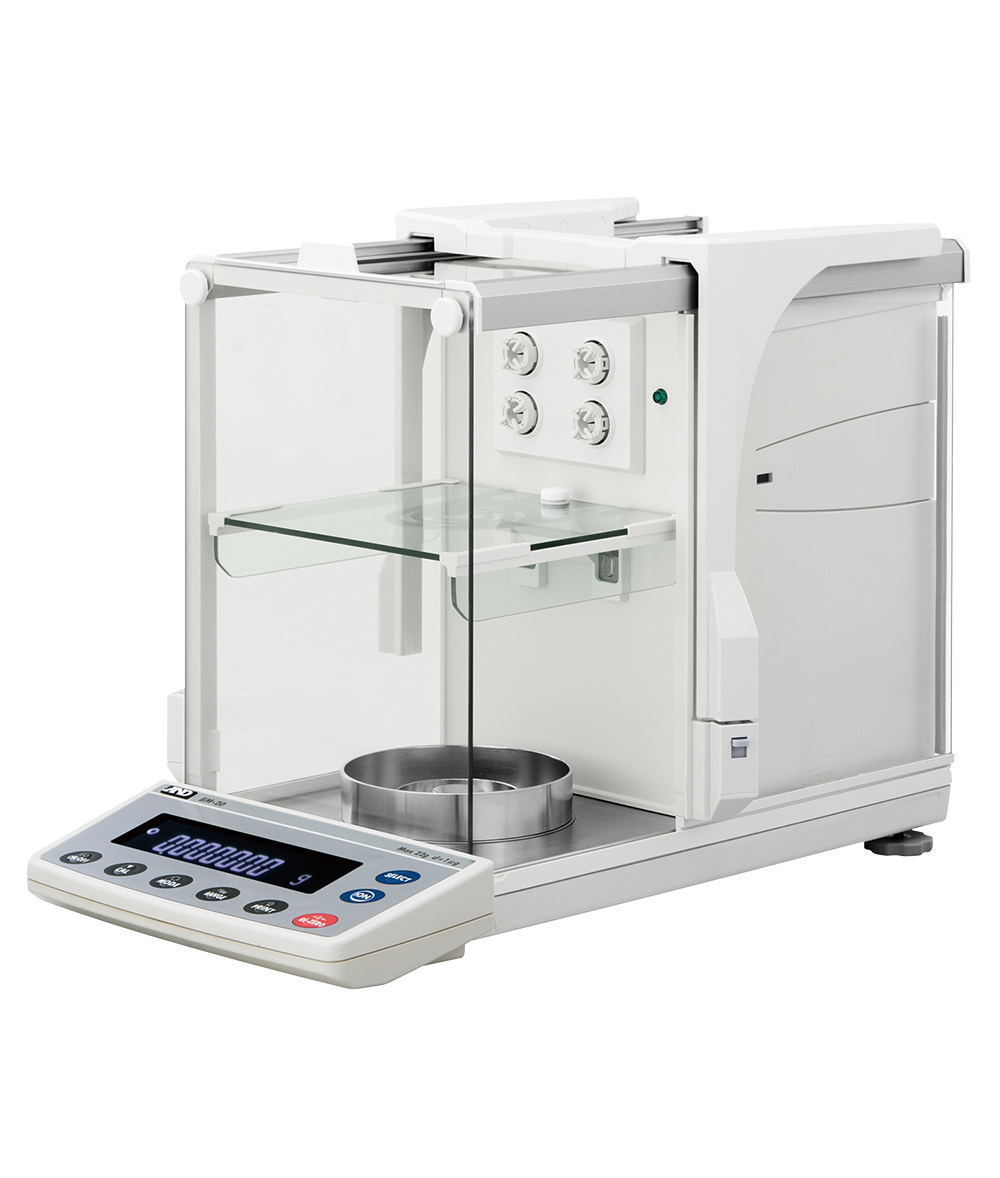
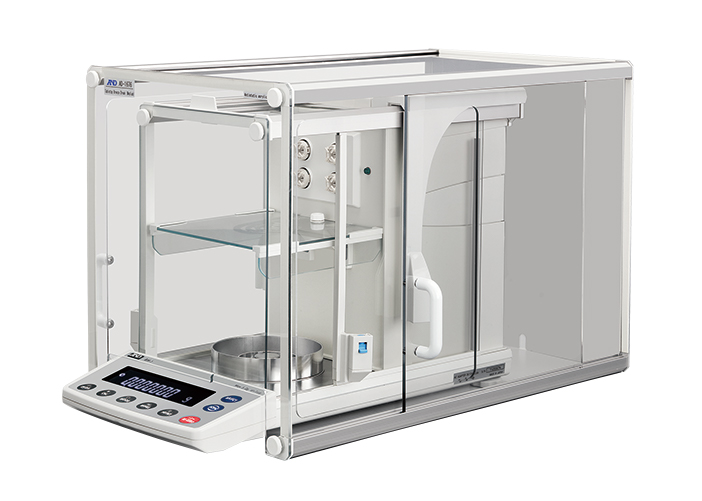
A&D Co., Ltd. (Head Office: Tokyo, Toshima Ward, Representative Director and President: Yasunobu Morishima) has launched the new “BM-5” and “BM-5D” micro electronic balances, which allow for high-precision weighing from 1μg and are ideal for pre-processing, such as element analysis and mass analysis.
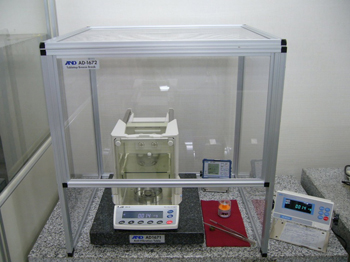
Both have a 5.2g weighing capacity, and are equipped with a windless ionizer as a countermeasure against static electricity, and a desktop breeze break (M) as standard.

Main Features of the “BM-5” and “BM-5D” Micro Balances

  • BM-5 (Single-Range Model/High-Performance Series)
    • Top micro electronic balance model made by A&D
    • Weighing capacity of 5.2g, minimum display of 0.001mg (1μg)
    • 1g repeatability within the weighing capacity, with a standard deviation of 0.0012mg (1.2μg)
    • Minimum weighing value of 2.0mg, in accordance with the 2.0mg minimum weighing value listed in Chapter 41 of the U.S. Pharmacopoeia (USP)
  • BM-5D (Smart Range Model/Basic Series)
    • Weighing capacity of 5.2g, minimum display (from 2.1g) 0.001mg (1μg) / (from 5.2g) 0.01mg (10μg)
    • 1g repeatability within the weighing capacity, with a standard deviation of 0.004mg (4μg)
    • Minimum weighing value of 5.0mg
    • Even if a tare weight that exceeds the precision range weighing capacity is used, weighing within the precision range (minimum display of 0.001mg) is possible
  • Features shared by BM-5/BM-5D
    • Equipped with a direct-current windless ionizer for electrostatic discharge as standard (patented)
    • Equipped with a desktop breeze break (M) as standard
    • For anti-static purposes, a conductive glass made of metallic film is utilized for the breeze break
    • A weighing pan that uses a latticed filter, which is less susceptible to breezes, is included as standard.
    • Includes a backlit LCD display that increases visibility and reduces eye fatigue
    • A cross-slide door that allows for both hands to be used to improve performance.
    • Built-in calibration weight
    • A password function is provided as a security measure.
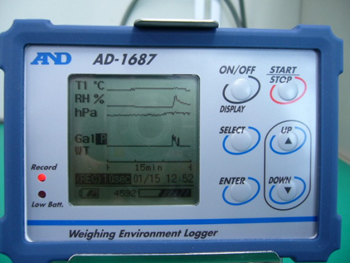
    • Performance evaluation in the installation environment is possible using AND-MEET, a weighing environment evaluation tool.

BM Series Product Page

Microbalances with minimum displays of 1.0 to 0.1 μg are used in the inductively coupled plasma (ICP) method for elemental analysis. One microgram (μg) is equivalent to a one-millionth of a gram. Common reasons that a microbalance is used are that elemental analysis is quantitative and small samples of a few milligrams are used.

A few years before the start of sales of the microbalances (with minimum display 1 dig = 1 μg) developed in my division, I had the opportunity to visit facilities that carried out elemental analysis. Each time I visited these facilities I gained valuable insights and experiences. In balance development and production, balance performance is always inspected with standard weights. However, in elemental analysis an unknown sample powder is weighed each time and disparities in performance arise from differences in measured material and the measurement environment.

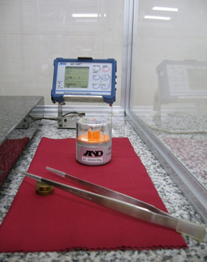
Performance testing of balances at A&D requires that the balance be 1) placed on an anti-vibration table 2) on a stable and rigid bench 3) with a solid foundation. 4) The measurement room must be partitioned off from the rest of the lab and 5) the microbalance must be placed inside an external breeze break to reduce drafts from air conditioning systems. 6) The temperature, humidity, atmospheric pressure, vibrations and wind speed are to be monitored. 7) The balance must be plugged in for approximately one night and a standard weight is used for inspection. Finally taking into consideration the largest source of disturbance, heat from the human body, 8) a special set of 21 cm tweezers must be used to ensure the technician’s hands do not enter the breeze break when confirming repeatability with the 1 g weight.

If proper attention is paid to the measurement environment as detailed above, the repeatability of the BM-20 (22 g capacity, 1 μg minimum resolution) operated manually with a 1 gram weight has been confirmed to be at best 1.2 μg and with this repeatability it is possible to measure to a minimum weight equivalent to 2.4 mg.

Some causes of reduced microbalance performance are from the installation environment and the act of weighing. For the installation environment, the problem is not that the temperature, humidity, or atmospheric pressure is too high or too low but the small changes in the conditions as detailed below. 1) A weak breeze from an air conditioning unit can create ripples of 0.1˚C changes in room temperature imperceptible to humans that negatively impact the display stability of the balance. After deciding to eliminate the source of the breeze by 2) turning off the air conditioning unit immediately before weighing creates slight temperature fluctuations, another cause of display instability. General weighing with balances should be an accurate and agile process. Sources of error caused by the environment on the balance should be minimized, that is, 3) measuring should be done quickly. The door to the weighing chamber should be opened sparingly and the door should not be opened too far, and operations should be kept short to prevent drafts inside the weighing chamber. This phenomenon can be easily inferred from our experience of being in a warm room in winter. That is, when a door is opened more cold air rushes into a room if the opening is large and it is opened for a long time.

Eliminating the effect of the operator’s body heat and breath is essential as the operators themselves contribute the largest sources of error for a balance. We recommend the following for basic operation: 1) Operators should refrain from operating a balance while they are sweating. 2) Operators should wear proper laboratory clothing and refrain from wearing T-shirts as they disperse heat. 3) Tweezers should be used to prevent the exchange of heat caused by putting fingers inside the balance enclosure.

Fig.1 AC on, no external breeze break
Fig.2 AC on with external breeze break

The above graphs show the effect of air conditioning on the performance of a balance. The same balance was used in the same location for both measurements. The horizontal axis shows a 24 hour time period, the red vertical axis shows temperature change and the black vertical axis shows the standard deviation for a 20 g gram internal weight measured 10 times. That is, each point is the standard deviation of ten consecutive measurements. The graph on the left has negligible temperature change and stays between 26 and 25˚C but the repeatability averages 5 μg and crosses 8 μg in 8 places. The temperature change is larger, 1.8˚C, for the graph on the right; however, it is much more stable with repeatability averaging 4 μg and at worst reaching 6 μg.

The cause of this difference in performance for the balance was confirmed to be tiny ripples in temperature. These are shown by the 0.1˚C temperature fluctuations occurring after 19:00 on 7/12 in figure 1. Although the single day change in temperature in figure 2 is large, there are no temperature “ripples” and the temperature change occurs steadily. The reason for this is the balance in figure 2 was enclosed in the AD-1672 Tabletop Breeze Break causing the small fluctuations from the AC to disappear, allowing the temperature to transition gradually. This data demonstrates that balances are stable during gradual changes in temperature over the course of a day and weak against slight temperature fluctuations over short durations. The external breeze break is an effective countermeasure for drafts caused by air conditioning systems.

Fig.3 Typhoon no anti-vibration table
Fig.4 Typhoon with anti-vibration table

Figures 3 and 4 are graphs from two microbalances used in the same location at the same time during a typhoon. In the graph on the right the AD-1671 Anti-vibration Table is used whereas in the graph on the left it is not. Winds from the typhoon cause the building to sway in ways not detectable by humans and cause the repeatability of the balance to deteriorate. However, the passive vibration canceling ability of the anti-vibration table has proven effective as a countermeasure for the imperceptible movements of buildings. Active vibration canceling tables such as the ones that use air suspension are known to shake the balance ever so slightly leading to unstable measurements.

The above graphs illustrate the necessity of understanding and analyzing the various disturbances and show that balances will have greater stability when the correct countermeasures are used for those disturbances. In general, the change in temperature for a day should be kept within 4˚C and the short term (30 minute) temperature change should be within 0.2˚C. Humidity should change no more than 10% in a day and atmospheric pressure should be within 10 hPa. Vibration and wind should be kept to a minimum.

Monitoring environmental variables is critical for ensuring balance performance and as a result we developed the world’s only environment logger capable of simultaneously measuring and recording temperature, humidity, atmospheric pressure, vibration, wind speed and weighing values. Furthermore we have perfected “AND-MEET”, an environment evaluation tool used for the 24-hour monitoring of the balance and environment. The figures 1 to 4 were results of AND-MEET, and by installing and using these instruments and tools in the actual points of use of microbalances, we can evaluate the installation environment and propose improvements for each laboratory. Through the introduction of this established method, these tools provide the technical support to ensure that the microbalance can be used worry free. Excluding operation methods, we have perfected the method of evaluating and proposing improvements to the measuring environment.

After inspection of the remaining weighing operations, the following countermeasures were drafted. The required minimum weight for elemental analysis is around 2 mg and a weighing tolerance within 0.2 mg (10%) is considered satisfactory during sampling, but to ensure the precision of the analysis results 2 mg±10 μg is desired. In general, samples are weighed on quartz or platinum weigh boats up to 3 times, but the minimum display of 1 μg is not required for all processes. Accordingly, the following three steps can be suggested: 1st Weighing: Individual boats are left in the weighing chamber to adjust to the temperature and weighed to the nearest 1 μg. 2nd Weighing: The sample is weighed together with the boat in the 0.1 mg range or 0.01 mg range. 3rd Weighing: The boat and sample are left in measurement chamber to adjust to the temperature before the final measurement in the 1 μg range. By using this method we are proposing that when measurement in the ug range is unnecessary, measurement should be in the larger ranges and additionally from the measurement in the microgram range for the initial tare and final value the sample value can be obtained from subtracting the weight in 3rd weighing from the weight in 1st weighing.

This method reduces the number of measurements required in the 1 μg range and potentially shortens the measurement time necessary for the 0.1/0.01 mg estimates. This in turn reduces the change in temperature inside the weighing chamber allowing for stable measurements. This proposed measurement method assumes that the time the chamber door is opened is as short as possible and the door is closed before each measurement to minimize changes to the interior of the chamber.

Even through adopting these methods, the minimum weight obtained from the 2.5 μg repeatability in the specifications for the BM20 is 5 mg (2.5 μg × 2000=5 mg). Determining sample weights under 5 mg require an ultra microbalance with dig = 0.1 μg. However, preparing an environment for measurement with an ultra microbalance is extremely difficult. I’ve seen many ultra microbalances in laboratories that I’ve visited collecting dust from disuse. As this has become quite long I will wait until next time to expand upon the problem of minimum weight and microbalances.

We launched our BM-20/22 microbalances two years ago now, and its sales performance over the past two years has exceeded our expectations of that time. So we are now presenting some important information for stable weighing with the microbalance that we have learnt in the course of its usage.

Before the introduction of the BM series, the high price demanded for microbalances was clearly not being well received by the market. This is the impression we received anyway, from the many researchers who would approach our booth at trade shows asking for a microbalance to be commercialized and offered at a lower price by us. We also conducted market research on microbalances with an eye to commercialization. At the time, the many opinions we heard suggested that stable measurement results became a problem every time due to the installation environment, with researchers hence losing faith with microbalances. The equipment makers did not seem to want to pay attention to these problems and dealers were often stuck in the middle of these conflicting interests and did not want responsibility for selling these unreliable instruments.

The two causes of these problems have been determined to be (1) all imported microbalances were still circulating in Japan at prices reflecting the era of the weak yen, when USD1 was equivalent to JPY360; and (2) as Japanese manufacturers were not supplying microbalances themselves, the problems associated with the installation environment when performing microgram measurement could not be addressed individually or by any kind of systematic measures of offering technical market support.

Therefore, the BM-20/22 was offered at a price that was appropriate as a product manufactured in Japan. Further, a specialist tool for assessing the measurement environment at the customers’ end, “AND-MEET”,*1 was developed beforehand and offered to the market. As a result, the end users (researchers), as well as the dealers, came to use or sell microbalances with peace of mind in Japan. With the implementation of AND-MEET, A&D was also able to develop support technology relating to the installation environment of microbalances. What follows is the technical summary regarding micro measurement based on information we garnered on site in a working environment, which should serve as a further reference for those presently using microbalances or considering their introduction.

The BM-20/22 has a minimum display of d=1µg and a repeatability of 2-4µg. If the installation environment is properly arranged, it has the actual ability to go under 2µg in repeatability. As each device is tested for a 24 hour period to confirm repeatability before it is shipped, customers can be assured these figures are based on actual data from their microbalance. However, to ensure the catalog specification for repeatability is met, it is necessary to properly prepare the installation environment. The main causes of inaccuracy (uncertainty) in the installation environment are breezes, temperature, humidity, vibrations, foot traffic in and out of the measurement area, the construction of the building, the geographical conditions and weather. Problems caused by the people actually performing the measurements could also extend to improper handling of the microbalance or measurement sample, or static electricity they generate, etc.

Below, these different factors will be explained in order using examples from actual experience in the market.

Influences from temperature changes or breezes from air conditioning units (*1)

A microbalance would normally be installed in a specialized room for such measurement. The majority of earlier microbalance measurement rooms were sealed-off rooms of a size of about 3 Japanese tatami mats (approx. 5 square meters) with air-con units moderating the measurement environment. Ventilation from air conditioning can prevent any large fluctuations in temperatures in a room, but at the same time, in order to keep the temperature at a steady level it also generates a breeze. Also, as air-con units are repeatedly turned on and off to control conditions, a temperature change of about 0.5°C is constantly repeated. This breeze from the air-con unit and the slight temperature changes it causes repeatedly can be fatal for microbalance measurement.

As a countermeasure, the microbalance is arranged so that it is not directly hit by the breeze from the air-con unit. As the breeze break mounted on the microbalance as standard is not enough to prevent the unit being directly hit by air disturbance, a tabletop breeze break is often used that covers the entire microbalance unit. The effect of this is significant, and when there are no other causes of instability, repeatability can be reduced from 10µg to 3µg.

As a fundamental solution to these problems, it is necessary to prepare a wider measurement room to increase the thermal capacity of the room, limit the number of people entering and use a partition or tabletop breeze break to block the breeze from the air-con unit. By taking these countermeasures, it is possible to reduce the adverse effects of aggressive temperature control and realize more passive stabilization of temperature conditions – a technique better matching the microbalance.

For creating a microbalance measurement environment, it is important to reduce the influence of air conditioning, which is the greatest external disturbance for a microbalance, by implementing the above-mentioned countermeasures.

Influences from changes in humidity (*1)

It is necessary to plug in microbalances for at least one day prior to commencing use for measurement. This is in order to equalize the internal temperature within the device so they can deliver accuracy as a microbalance. Moreover, while it is not a problem where air conditioning is running on a continuous basis, if the air conditioning is switched on immediately prior to measurement a change in humidity will happen. If the humidity of the measurement room drops, the microbalance will start moisture release from its sensor unit, and that change will be expressed as a slow drift in the measurement value due to a change in the zero point. Microbalances respond to temperature or humidity changes over the course of several hours, but as the change in temperature and humidity is greatest at the point immediately after starting air conditioning, it is particularly important to act with caution at that time. Further, if there is a heating furnace in the room where the microbalance has been installed, while the furnace is active there will be a slow change in room temperature and during that period the repeatability of the microbalance will worsen. Particularly, during heating there will be dramatic change in temperature and a big influence on measurement, so it is necessary to be careful to separate measurement time and operation of the furnace.

Influences from vibrations and foot traffic (*1)

In the research laboratory, the stand the microbalance is placed on can also double as a work desk. In situations like this, if the operator is there at the time of measurement, vibrations from their work can lead to instability in the microbalance. To address this factor, please do not perform other operations at the time of measurement and use an anti-vibration table for microbalance use recommended by the maker.

If someone is walking behind at the time measurement is being conducted, as even air is fluid to some degree and therefore has viscous properties, the act of someone walking past will cause the air to move. As measurement in the scale of micrograms will be affected by any kind of movement of the air, the microbalance should be set up in an area that does not receive any passing foot traffic. By the same token, if measurement is conducted when people are entering or leaving the room repeatability will worsen, so care should be taken in this respect.

Besides the influences above, it is necessary to install the microbalance in a position where it does not receive any direct sunlight, is far from any doors where people will enter or exit, in a building which does not shake easily, and near a wall or column.

Influences from construction of the building, geographical location and weather

If measurement is performed in a building near a large estuary or on the coast, near a highway or road which is used by heavy vehicles, or in an area with neighboring high-rise buildings built on weak ground, even a normal analytical balance with minimum display of d=0.1mg will on occasion have unstable display. In buildings recently constructed as seismically isolated structures, when an earthquake occurs it may take several days for the balance to achieve stability again. Further, anti-vibration stands employing costly air suspension are designed on the premise that shaking is constant, so these will also lead to instability for the balance. The cause of instable measurement values in bad weather is shaking of the building due to strong winds or high tides caused by low pressure systems or proximity of typhoons. There is presently no established method of stabilizing low frequency vibrations of just a few dozen Hertz like these. When microbalances perform calibration with their internal weight and more time is needed than usual to complete calibration, this could be due to vibrations in the building. This method is actually recommended as a reference to determine whether the time is good for the balance to be used. (*2)

Influences from static electricity and method of using microbalances and measurement samples

Measurement work with microbalances requires “swift accuracy”. If the air changes in the weighing chamber, a convection current is created. This convection current accompanies faint changes in temperature, which destabilize measurement at a microgram level. For similar reasons it should be strictly forbidden to put one’s hand into the weighing chamber. Instead, special long tweezers should be used. Further, the door to the chamber should only be opened to a minimum degree and the measurement sample should be placed very gently on the weighing pan. It is important to perform these steps swiftly.

As body heat or breath from the person performing the measurement has a negative impact, it is also important to only go near the microbalance as necessary and cover one’s body with white robes or other appropriate clothing.

Static electricity can’t be seen but its impact is very serious. If humidity drops below 40%, people can easily become charged with up to 10KV of static electricity. Also, weighing paper, a weighing pan made from plastic or the sealing and removing of the cap on a vial can cause static electricity which results in measurement errors of more than 1mg. In order to minimize the effect from static electricity it is necessary to prevent the electrical line of force from charged people entering the weighing chamber. To do this, an analytical balance should be used whose weighing chamber is constructed with glass treated with conductive material to make the balance resistant to static electricity. Also, the measurement container or sample should be neutralized using a static eliminator before measurement is performed.

As can be seen above, stabilizing microbalance measurement is not an easy task. Therefore, at A&D the use of the “AND-MEET” installation environment evaluation method for analytical balances including microbalances is recommended.

If you have concerns on the introduction of new weighing devices, or if you would like to improve the measurement environment and thereby increase the quality and productivity with regards to measurement, please do not hesitate to contact your nearest A&D representative.

References

(*1) 28th Sensing Forum “Investigation of the Basic Performance of Analytical Balances”

(*2) Roundtable Research Conference on Organic Microanalysis, “1st Electronic Microbalance Seminar – Towards Accurate Measurement”

(*3) A&D Development Story No. 17 “Things to Keep in Mind when Using Analytical Balances (Proper Handling Edition)”

Analytical balances are very sensitive. Therefore, they are heavily affected by the environment in which they are installed and the way measuring personnel handle them. With regards to methods for assessing the environment, running AND-MEET (*1) will yield a judgment and assessment, and from there a concrete process for improving the environment can be proposed. In addition, in “Development Story 17”, I explained a method for selecting a location for measuring instruments. So, for this edition of “Development Story”, I will discuss proper handling with a focus on analytical balances.

The basic motto for weighing instrument operation is “quick and accurate”. So in the case of someone taking time to slowly open and close a breeze break door, these words would tell us that such is not an optimal way of conducting measurement. It means that by increasing the time that the breeze break door is open, the air within the breeze break changes, and the weighing area’s temperature will change. From amongst the analytical balances, I will use the microbalance, capable of measuring 1 millionth of a 1 yen coin (1 gram), as an example.

For instance, in bioscience research fields, many labs use micropipettes. Even with pipettes, we know that without accurate and experienced handling, random errors occur, and if there is a problem with the pipette itself then systematic errors can occur. The minimum capacity for a micropipette is around 1 to 2 μL. 1 μL is an extremely small amount compared to what we are used to in our daily lives. However, if 1 μL of water is converted into mass, it becomes 1 mg, and a sensitivity of 1 mg is a minimum display for general-purpose precision balances in the weighing instrument industry. Yet microbalances can measure 1/1000 of this unit – an ability to measure where 1 digit = 1 μg is stipulated. In other words, determining 1 μg is more difficult than using micropipettes, so it can be said that it’s clear that experience and accuracy are demanded in measurement operation.

Electronic balances deliver weighing results via digital display: from general-purpose balances with a minimum display of 10mg or 1mg to analytical balances with minimum displays of 0.1/0.01/0.001mg. Because of this, people think that if the weighing sample is simply placed on the pan, an accurate weighing result will be displayed instantly. However, with readability that is orders of magnitude more precise than the minimum capacities of micropipettes, one must question whether the result displayed is really correct, and recognize that instability in the displayed result can be quite natural depending on how the instrument is operated.

Therefore, I will explain how errors in weighing occurred using actual examples from weighing sites.

1) Effects of static electricity

For weighing instruments used in production lines using automated machines or at sites conducting plastic injection molding, there have been instances of displays becoming unstable, or measurements changing in one direction with the passage of time. This phenomenon is called “drift” in the weighing industry. Currently, in the production processes for pharmaceutical manufacturing, primary and secondary batteries, electronic parts such as IC chips and LEDs, and resin molds, many weighing instruments are used for quality control. But on these production lines, the environment is usually like that of a clean room, and we have confirmed many areas with 24-hour air conditioning and humidity levels sometimes below 20% due to the undesirability of moisture. In other words, it is dry, and friction from insulated material caused by the moving around of objects causes static electricity to build up easily. Moreover, people working on the line or research can sometimes build up around 10,000 volts of electricity themselves. Under these circumstances, the effects of static electricity become greater, and errors of a few dozen milligrams can easily occur. (*2)

If the humidity in the weighing instrument’s installation environment cannot be increased over 40% or if electrical build up occurs faster than electrical discharge, please introduce a static eliminator and conduct weighing operations after actively removing charges from the weighing sample.

2) Effects of temperature

Let’s say you check the quality of a molded item right after resin molding it by measuring it on a weighing instrument, or you measure out some pharmaceuticals into a handheld vial and then weigh it, or you take a sample from another location and bring it in to measure it right away. In scenarios like these, a difference between the weighing sample’s temperature and the weighing area’s temperature will occur. This temperature difference will become a weighing error. The reason for this is that when the sample’s temperature is higher than the room temperature, a layer of warmer air is created around the sample, and a slight upward air current is created. That air current has the effect of pushing the weighing sample up, and the weighing measurement will come up light at first. When the sample later reaches room temperature, the original weight will be displayed.

It depends on the temperature difference and the shape/material of the sample, but weighing errors on the order of a few dozen milligrams can occur.

thermograph image
Fig.1 Thermograph image of a container after being gripped by hand

Fig.1 shows the results of thermograph observations of a coffee can placed on an analytical balance. The can has been gripped for a few dozen seconds before being placed on the pan. Metal is especially conductive of heat, and a deviation from ambient temperature of a few °C can occur in a short period of time. It is known that the convection current generated by this temperature difference will affect weight measurements. (*3)

I experienced this personally more than 10 years ago, when we were setting up mass production of weights with tolerances conforming to the OIML Class E2 standard and compositions conforming to the Class F1 standard. In this instance, we found that our weight-adjusted 200 g weight had grown heavier on a 0.1 mg level the next day. We had touched the weight with gloves, but after conducting weight adjustment and screw tightening, we found that our body heat had warmed up the weight slightly. It was a good experience for me to understand why people say it is not good to touch weights directly with one’s hand. In places where weighing instruments are being used, one may see people picking up weights with gloves and calibrating, but at least when it comes to analytical balances, we recommend doing calibration and performance checks using tools such as tweezers.

3) Effects from work in the weighing area

Analytical balances come standard with a breeze break. It’s there to stop drafts and maintain stability within the weighing area. However, if the breeze break’s door is operated roughly, an impact will occur at the end of the swing and the force will reach the balance’s weight sensor. This can result in variations in the zero point, and risks reductions in repeatability. But if the door is operated too slowly, the time when the door is opening and closing lengthens, and the air within the weighing area will be replaced. As a result, the temperature can become unstable and become another factor in the reduction of repeatability.

People’s hands exceed room temperature, and placing one’s hands in the weighing area can cause a disturbance in temperature. For this reason, the door should not be opened longer than necessary, the door should be operated accurately within a short period of time, and long tweezers need to be employed to avoid placing one’s hands in the weighing area as much as possible.

As an aside, I’ve searched far and wide for an off-the-shelf set of long tweezers that are usable for calibrating weighing instruments. However, I was unable to find anything fitting the description. It was then that I independently drew up plans for an ideal set of tweezers, and gave the manufacturing contract to a manufacturer near Tsubamesanjo in Niigata Prefecture. In the production of these AD-1689 tweezers, special regional production techniques that made Japan the #1 producer of eating utensils such as spoons and forks have been used. The original “monotsukuri” (craftsmanship, artisanry) techniques found throughout Japan contain skills passed down by craftsmen for more than 150 years, and it is thought that these techniques have supported Japan’s economic growth from the Meiji Restoration to the present day. I believe that continuing to support these techniques is absolutely essential to maintaining the Japanese economy going forward.

  • But I digress. I’ve summarized weighing instrument operation methods in a simple form below.
  •  When conducting weighing using a balance, special care must be taken with regards to the weighing sample’s static charge and temperature.
  •  It is especially necessary to actively introduce a static eliminator to take care of static electricity trouble in dry environments with humidity of less than 40%.
  •  For the weighing sample as well, care in controlling the temperature is needed, including measures such as not touching the sample directly with one’s hand. It is important to place the weighing sample in the weighing area beforehand, and allow it to adjust to the temperature there before commencing weighing.
  •  Weight measurement should be conducted quickly and accurately, the weighing area door should be opened as little as possible, and one’s hand should not be inserted into the weighing area.

Reading the precautions above, one may feel heavy with the difficulty of operating an analytical balance. However, please rest at ease. Lately, multiple analytical balances with internal static eliminators are on the market. Additionally, there are models which feature a weighing preparation room where the weighing sample can be placed to allow it to adjust to the temperature. And there is also the set of long tweezers for weighing operations which I wrote about.

Regarding precautions aside from weighing operations, it is necessary to connect the balance to a power source the day before weighing to ensure that it is stable. In the case of weighing instruments at the semi-micro level and below, it can take from 6-8 hours for a connected machine to completely adjust to the room temperature. Additionally, one must do as much as they can to ensure that vibrations, pressure changes, temperature changes and humidity changes do not occur in the weighing room. As part of this, foot traffic in and out of the room should be reduced as much as possible.

Lastly, regarding handling of weighing instruments, the characteristics of electronic components of electronic balances become more stable the longer the instrument is hooked up to a power source. The thermal distribution within the device, including the weighing chamber, will become even. Since these instruments do not use much electricity, I recommend continuous connection to a power source if possible.

I believe that going forward, weighing instrument manufacturers shouldn’t just conduct development that’s all about how good the performance is or how many features there are, but that they should also come up with solutions which are easier to use on-site and which also include peripherals to display and reduce weighing errors. Moreover, this proposal means providing a comprehensive weighing and measuring service with everything from analysis to assessment, using environmental measurement, communication utilities, data management, graphing functions, and more. What is important to manufacturers at such a time is knowing the weighing and measurement market that forms the actual usage locations for these instruments. I would like to continue emphasizing market surveys and providing original products according to principles emphasizing the best results for all parties involved.

*1 Regarding AND-MEET: Please refer to the 28th Sensing Forum: Investigation of the Basic Performance of Analytical Balances (PDF 1.28MB)
*2 Regarding the effects of static electricity: Please refer to Training Material for Balances (1) (PDF 437KB)
*3 Regarding the effects of temperature on weighing samples: Please refer to Training Material for Balances (1) (PDF 437KB)

In this edition, I want to talk about the installation environment for analytical balances, which have seen a lot of trouble on the market. In the next edition, I’ll be talking about how to properly use an installed analytical balance and take measurements accurately, using knowledge gained from actual usage scenarios.

Because analytical balances are very sensitive, the environment in which they are installed will affect them a great deal. For the same reason, we know that the way in which operators handle the balances also has a large effect. As far as assessing the measuring environment is concerned, thanks to our measurement environment evaluation tool option “AND-MEET” (*1) and our market response, it’s possible to get a clear idea of how to improve the measuring environment from a balance installation environment assessment. So for this edition, I’ve put together some general information about installation environments.

Since the March 11 Disaster, we continue to have frequent earthquakes in eastern Japan. This is a special concern for analytical balances capable of measuring on a microgram level, for not only do they pick up earthquakes, but also things such as movement of people, handcarts, and forklifts, as well as vibrations and changes in room air pressure from the opening and closing of doors.

As for weather effects, the force of wind from passing low pressure systems like monsoons and typhoons can cause problems due to buildings shaking, which becomes an even greater issue on higher floors. Buildings built with a quake-absorbing structure, which have become more common recently, are designed with shaking as a given. Such structures can shake for days due to wind pressure or earthquakes.

For situations like these, we have confirmed that passive anti-vibration tables such as the AD-1671 improve issues with repeatability. On the other hand, we have found that despite their high cost, active air suspension anti-vibration tables used for optical measuring instruments actually become a source of vibration, and negatively affect analytical balances.

Administrators of balances often ask us about the permitted specifications of an installation environment for an analytical balance. A&D recommends the following: (1) daily fluctuation of temperature of 4°C or less (within 10 – 30°C) and short term fluctuations of 0.2°C/30 minutes or less, (2) daily fluctuation of humidity of 10% or less, and (3) daily fluctuation of air pressure of 10 hPa or less. In particular, regarding the short term temperature fluctuations written about in (1), it is known that the repeated slight changes in temperature caused by air conditioning have an especially destabilizing effect on balances’ zero-point display. To cite an extreme example, our data shows that even within the sort of windy environmental setup specified by the Ministry of the Environment’s Manual for Continuous Monitoring of Air Pollution (a.k.a. PM2.5), using the AD-1672 tabletop breeze break (which surrounds the balance area) can have such an improving effect that catalog specifications for the microbalance can be met. (*2)

Allow me to explain proper installation of a balance using an actual example. Fig. 1 is a rough sketch using the seminar room in our R&D center’s 2nd floor as a model. The seminar room is about 10 meters long on each side, and there are multiple air conditioning units in the central area of the ceiling. It would be rather large for a lab, but it resembles many labs in terms of the layout of things such as the air conditioners and lab tables. I’ve numbered the tables in this diagram from #1 – #16. I would like you as well to think about which spot is the best place in the seminar room (lab) to install a balance.

laboratory layout
Fig. 1 – Diagram for evaluating balance placement

To select a location for the balance, first we must find a location that minimizes temperature fluctuations, which have the greatest effect on balances’ performance. To be more precise, a place that is (1) out of direct sunlight and (2) far away from air conditioner vents. Next, we select a (3) corner of the room next to the wall. The center of a room has weaker construction, and the floor tends to shake more easily. However, there tend to be structural supports in the corners of a room, and they tend not to shake easily. In addition, even if room temperature is being controlled at a certain level, floors and walls often go below room temperature, especially during winter. Level temperature means that the temperature is evenly distributed (the flow of heat is even), but in the case of walls which have outside air on the other side, balances near that wall may be constantly subjected to outside temperature variations. For the same reason, installation should not be done near window glass. That is why it is best to (4) install the balance near a wall which has another room on its opposite side. As for the table on which it is installed, (5) a hard balance table with high heat capacity should be used, and (6) the balance table should be separated by a few centimeters from the wall and other tables in order to isolate it from heat and vibration coming from the wall and floor. A (7) dead end area with low foot traffic should be selected because people tend to come and go through the central part of a room. To further reduce people’s influence, (8) an area far away from the door should be used, on a table where (9) only measurement is conducted in order to prevent vibration from people’s actions from affecting the balance. Additional preconditions are that the room and wall where the balance is located should be (10) far away from routes with high traffic or heavy objects moving, and (11) on as low a floor as possible.

Using the above conditions, we can determine that within Fig. 1, the best areas in the room to place a balance are #3 as well as #2, the areas where the effects of direct sunlight are low, air conditioner vents and windows are far away, routes where people move and doorways are far away, and near an area where structural materials such as supports are installed. Issues with #3 include being near a wall to the outside, and near a wall to a hallway, but I believe that will not be an issue because only people pass through the hallway.

The above constitutes a general assessment of balance installation environments, but labs often have individual circumstances, such as having a heat-treating furnace, or there being a lot of people coming and going during the day, and so on and so forth. Ultimately, running AND-MEET in the locations where balances are to be placed, assessing the environment there, making any problems clear and developing concrete measures to deal with them is thought to be the best course of action.

To sum up the above, here is what is required of a balance installation environment.

  • Be especially sure to consider the room temperature stability, and do not place a balance near an air conditioner vent in order to reduce the effects of temperature variations. If there is no other option, then utilize things such as tabletop breeze breaks or partitions to cut off direct wind.
  •  The balance should be placed in an area out of direct sunlight, away from routes people use and away from persons working on other things. To minimize the effects of vibrations, the central area of a wide floor should be avoided, and an area near the building’s supports should be selected. At this point, the balance table should be separated a few centimeters from walls and supports in order to isolate it from vibrations and heat from the building.
  •  To reduce effects from vibrations, the balance should be placed in a location as far as possible from paths for moving heavy objects.
  •  The building will shake when low pressure systems cross the area, so install the balance on as low of a floor as possible. In addition, to reduce the effects of the building shaking due to earthquakes and vibrations, an anti-vibration table should be installed.

40 years have passed since the balance was transformed into an electronic device using microcomputers. Since then, digitalization has progressed, and the balance has come to be regarded as an instrument which can be easily used by anyone. However, at present, analytical balances have a resolution of 1/20,000,000 or more, and a certain level of skill and preparation is required to enact exact measurements. In particular, with regards to balance installation, there are many matters to be taken into consideration. I hope this article will help you understand the best environment, install the machine and set up the environment, and allow you to conduct reliable measuring work.

*1 Please refer to Development Story 12: Solutions Provided by the BM Series Part II
*2 Please refer to the 28th Sensing Forum: Investigation of the Basic Performance of Analytical Balances (PDF 1.28MB)

This is Part II of “Solutions provided by the BM Series”.

The BM Series of micro-balances went on sale in December 2010 (in Japan). There were 2 development objectives for this series: a standard anti-static function as a countermeasure against static electricity and verification of microgram-level measurement performance in the field. These 2 objectives can be considered proposals for solutions to potential problems in the field.

In the micro-balance market, the most important point in question is whether the measurement performance as specified by the catalog can be ensured (especially in the case of repeatability) in the environment where the balance is set up. For example, the BM-20 demands high precision and achieves a resolution of 1/ 20,000,000 with a capacity of 20 g and a minimum display of 0.001 mg. Because 1 μg is such a small mass, changes in temperature, humidity, or atmospheric pressure, slight breezes from air conditioning, and minute vibrations of support tables can negatively affect results. These external factors create instability in measurement values (particularly the zero point) at the microgram level and cause poor repeatability.

Problems pertaining to the setup environment stem from the fact that the micro-balance is so much more sensitive than its users and can detect minute environmental variations that users can’t. Since users can’t easily solve problems they can’t sense, they have a constant feeling of uncertainty about the balance. To eliminate this uncertainty in end users, we offered the Measurement Environment Evaluation Tool (AND-MEET) when the BM Series first went on sale and started to monitor actual usage environments.

AND-MEET constantly monitors the setup environment of the balance while simultaneously raising and lowering the internal mass of the balance automatically. With this tool, we were able to evaluate temperature changes and the corresponding repeatability of weighing values over time. Monitoring of the environment and weighing values helped us clearly identify errors that arise from the setup environment. It started to become clear that various issues caused weighing values to become unstable. These included large temperature fluctuations; minute repeated temperature fluctuations sensed by the balance caused by flowing air after users arrive at work and switch on the air conditioning (even when the room temperature is stable); pressure changes from opening and closing doors; and building movements caused by low-pressure drafts and distant earthquakes.

By pinpointing the causes of weighing errors, we were able to provide concrete methods to stabilize weighing values. These included introducing anti-vibration stages, setting up an external covering (breeze break) to reduce blown air from air conditioning, moving the balance away from locations where people are working and where vibrating analysis equipment is operating, and moving the balance to locations with minimal room temperature changes caused by outside air temperature. We were also able to evaluate the tangible effects of these measures.

I’d now like to discuss the measurement results acquired by AND-MEET. Figure 1 is a graph of temperature and measurement (zero point and span value (the weighing value minus zero point)) data taken over 24 hours from 5:00 PM Thursday, February 17 to 5:00 PM Friday, February 18, 2011 using a BM-22 micro-balance.

The balance was powered on at 5:00 PM on Thursday. The internal mass was automatically moved up and down in 40-second cycles and the ambient temperature, zero point, and weight were logged using the AD-1688 data logger. The ambient temperature rose from 19 to 22 °C over about 5 hours. The zero point also changed greatly after being powered on. From 11 PM on the 17th, the ambient temperature was comparatively stable, as was the zero point. Accordingly, the span value showed fewer fluctuations and stabilized.

From 9 AM to around 4 PM on the 18th, the temperature was quite stable, likely due to workers arriving and switching on the air conditioning. After 4 PM, there was a sudden temperature increase and the zero point and span value changed. This data was obtained at a university research lab that uses the balance. While the cause of the temperature changes could not ultimately be determined, the location can be described as a measuring environment with sudden temperature changes at certain times.

Figure 2 is a graph of temperature changes and the repeatability of the span value. Span value is calculated by subtracting the zero point from the weighing value. The repeatability of the span value is the standard deviation (σ) of 10 consecutive calculations.

Each point represents the standard deviation of 10 span values. The balance used to acquire the data was a BM-22, which is a micro-balance with a capacity of 5 g and a precision of 1 µg. Its specifications stipulate a repeatability of 4.0 µg with a 1 g counterweight.

From Figure 2, we can see that there were ambient temperature changes for around 6 hours after the balance was switched on and that the repeatability average was higher than 4.0 µg. After this period, it is clear that temperature changes were minor, the span value was stable, and the repeatability was at the specified level of 4.0 µg or less. After 5:30 PM on the 18th, the zero point changed due to another sudden room temperature increase and an accompanying worsening of repeatability was confirmed.

The graph provides supporting evidence for two important points when stabilizing balance performance: avoid sudden temperature changes and take sufficient time for the balance to warm up to thermal equilibrium before measurement. This is especially true for analytical balances. It is clear that it is possible to obtain measurement performance equal to catalog specifications with a micro-balance in this lab by eliminating the causes of the temperature increase after 5 PM or by measuring during the daytime, particularly in the stable measurement environment between 10 AM and 5 PM.

While the results have been omitted for space, AND-MEET confirmed worsening repeatability due to distant earthquakes and variation in repeatability over several hours due to low-pressure drafts. By providing this information, we were able to quantify the intangible anxiety users have always felt about the performance of analytical balances and also to later release the data in graphical form. This series of work has clarified problems with measurement environments and pointed the way to improved environmental setups and made it possible to measure stably with better precision. Through the abovementioned countermeasures, we hope to finally remove the doubt users have about using balances and improve usability in the workplace.