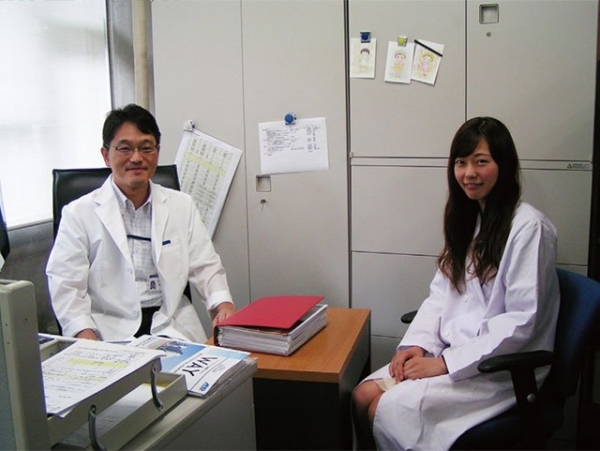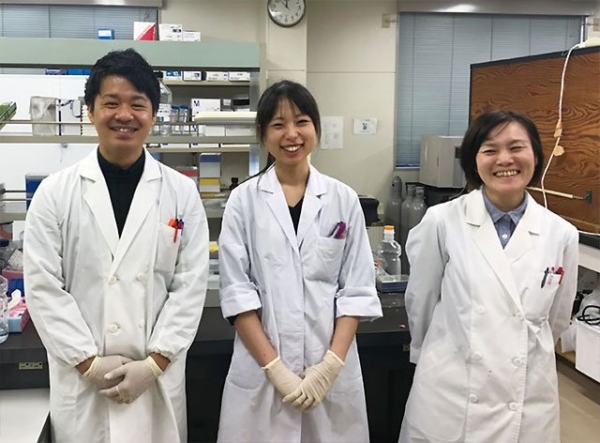
Interview with Graduate School of Frontier Sciences, University of Tokyo Department of Integrated Biosciences, Plant Life System Laboratory
~Plants and algae to save the Earth!~
“One problem of research solved by simply ensuring a stable weighing environment.”
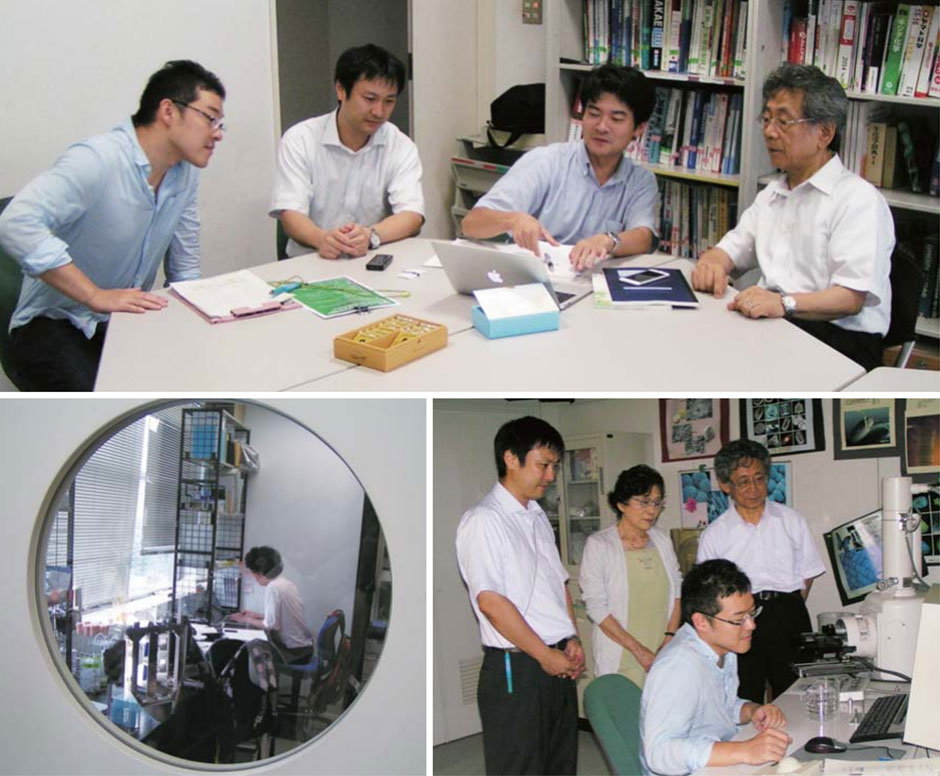
Biofuels derived from microalgae are attracting attention as a countermeasure against the depletion of fossil fuels and global warming. The Green New Deal1 announced in 2008 was an important step in making biofuel research a hot topic worldwide. New developments are expected in microalgae research with the new administration in the United States in 2017.
A&D’s analytical balance and balance environment analyzer are used for research on biofuels at Professor Kawano’s graduate school laboratory at the University of Tokyo.
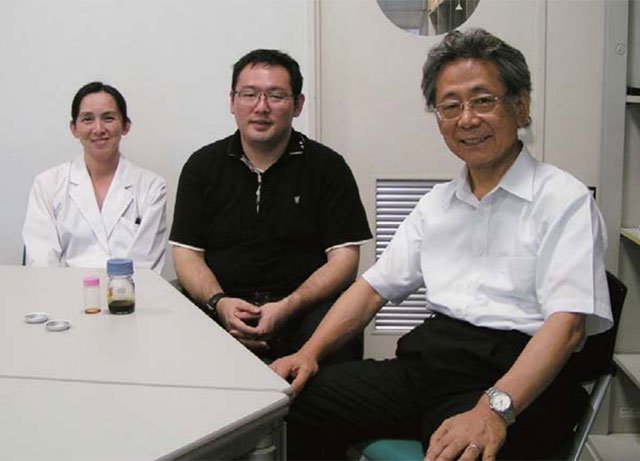
From the right
Department of Integrated Biosciences Plant Life System Laboratory Doctor of Science Professor Shigeyuki Kawano
Appointed researcher Bioscience Ph.D. Tsuyoshi Takeshita
Technical assistant Natsuko Ochi
What specifically are biofuels
First, let’s talk about the goal of your research.
Kawano: Our goal is to establish a large-scale microalgae cultivation system. We would like to link this research to actual material production.
Why is Chlorella2 promising for use in biofuel?
Takeshita: The main biofuel in the USA is still corn. The surge in food prices and diversion of cultivated land became social problems for a while but now seem to be calming down. Algae is promising as it is more efficient per unit of surface area compared to grains and can be grown in lands unsuitable for agriculture.
Kawano: At the Paris International Air Show in June 2011, a major aircraft manufacturer in France announced that it was developing a supersonic airplane capable of flying from Paris to Tokyo in 2.5 hours. This supersonic rocket plane, ZEHST, is planned to be zero-emission, using algae-derived biofuel.
Can an aircraft fly with fuel made from algae?!
Kawano: The prototype ZEHST is expected to be finished in 2020 and operation is set to begin in 2050. By that time algal biofuel is expected to be much more widely used. Some Japanese companies say that by 2018 they hope to begin production of such jet fuel just ahead of the Tokyo Olympic Games in 2020.
Ensuring precise weighing for everyone.
How do you use A&D’s analytical balances?
Kawano: We use the A&D balances to check the amount of oil that can be extracted from algae. An organic solvent extract of Chlorella is put in a special aluminum container and evaporated. The residue left in the container after evaporation is oil. High precision balances are needed to measure how much oil can be extracted from milligram chlorella samples.
Takeshita: Since weighing with a balance itself is a simple task, I initially thought that we could do without too much trouble. However, we had problems with weighing values differing between people and throughout the week.
Kawano: To resolve our dilemma, A&D’s sales reps came to the laboratory to help us. We were told it is important to create a stable measurement environment in order to increase the reproducibility of the weighing value, taking into consideration temperature, humidity and breezes from the air conditioner. The environment in the room where the balance is set up is essential for precise measurement. We found a room with little movement of air. Properly warming up the balance also helped our measurements. We wait 1 hour after turning on the balance before measuring.
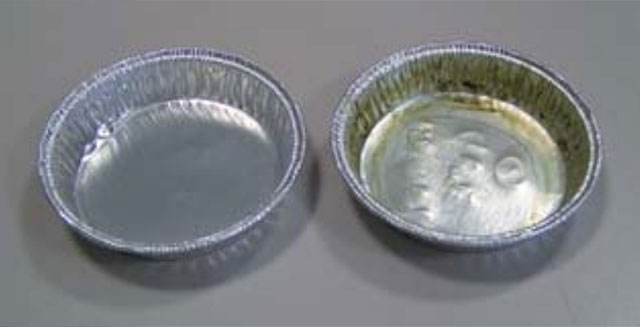
Special aluminum container, The container on the right has oil remaining after drying
Takeshita: The AD-1691 weighing environment analyzer that connects to the balance was also very helpful. Thanks to this device we could process repeatability measurements automatically. The touch screen makes operation easy and data comes out instantly instead of requiring input to a computer so experiments are completed quickly.
Kawano: We now have virtually no variation in the measured values. With the AD-1691 the operators can manage the balance themselves and have improved their technical skills.
The greatest challenge of bioscience in the 21st century is to contribute not only to the well-being of human society but also the prosperity of all life forms.
Tell us about the challenges for using algae for biomass fuel.
Takeshita: As with grain and horticultural crops, it is necessary to breed mass-producible strains. Until recently, there was no concept of microalgae breeding and their genome was hardly understood.
Kawano: In our study, microalgae are irradiated with a heavy ion beam that is proven for quality improvement of horticultural crops and we collect quantitative data on microalgae morphology. We aim to establish innovative, advanced breeding methods specialized for microalgae based on whole genome data.
The benefits that this research will give humanity seem very big.
Takeshita: Not only humanity. The earth is a coexisting system of humans and other life forms. We believe that the greatest challenge of bioscience in the 21st century is to contribute not only to the well-being of human society but also the prosperity of all life forms.
Kawano: Through this research, I hope to cultivate highly motivated researchers who can recognize various problems facing all life on Earth in relation to society and try to solve those problems by using bioscience as a weapon.
We would like to thank Professor Kawano and the Plant Life System Laboratory for taking the time to do this interview today. (Interviewer: A&D Company, Limited Sales Promotion Division)
Note 1: Green New Deal: Policy proposals for global warming, global financial crisis, and depletion of oil resources announced in 2008. It became famous as a policy adopted by Barack Obama, former US president.
Note 2: Chlorella: Generic name for freshwater unicellular green algae of the Chlorella genus.
Cooperation
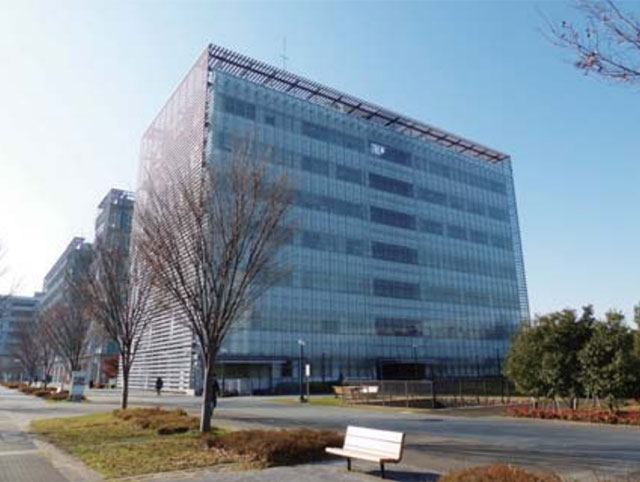
Graduate School of Frontier Sciences, University of Tokyo
Location: 5-1-5 Kashiwanoha, Kashiwa-city, Chiba Prefecture
University founded: 1877
Department of Integrated Biosciences established: 1988